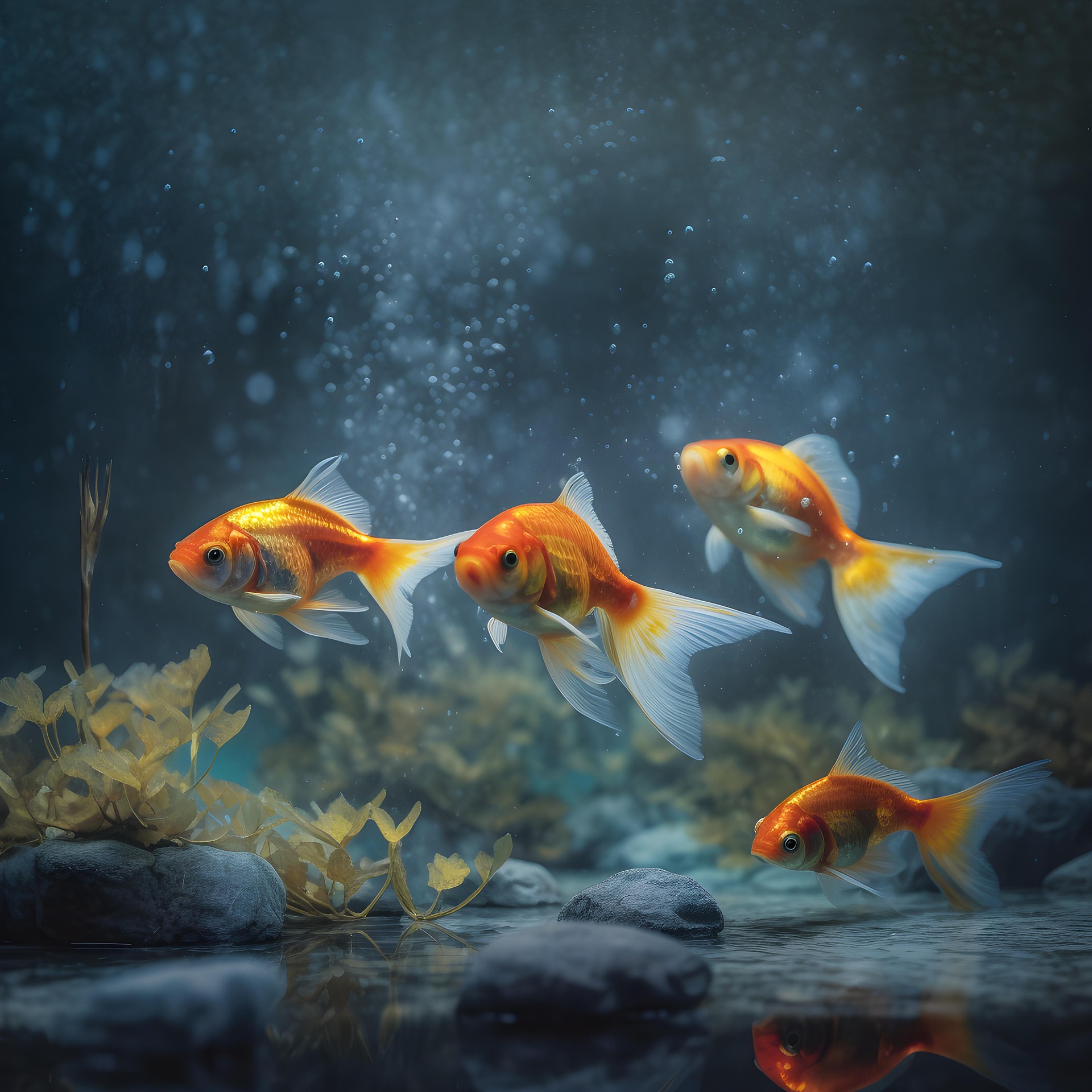
You decided to enter aquarium keeping. Great. Now comes the practical part: set up the aquarium in a way that works and that your future fish survive. This guide will take you from empty aquarium to the moment of adding the first inhabitants.
Shopping list
Essential equipment
- Aquarium (recommended 50-60 liters for beginners)
- Filter adequate to size
- Heater with thermostat (if having tropical fish)
- Thermometer
- Substrate (gravel or sand)
- Water conditioner (removes chlorine)
- Test kit (ammonia, nitrite, nitrate, pH)
- Siphon for cleaning
- Bucket exclusive for aquarium
- Fish net
Optional but recommended
- Lighting (essential if you want live plants)
- Decoration (driftwood, rocks, artificial or live plants)
- Lid or screen (prevents fish from jumping)
- Timer for lighting
Choosing the location
Before setting up, decide where the aquarium will stay. Moving later is very difficult (water is heavy: 50 liters = 50kg, plus the weight of the aquarium, substrate and decoration).
Good location: Flat and leveled surface, resistant to weight. Away from windows with direct sun (causes algae and temperature variation). Near electrical outlet. Where you can appreciate but not in constant passageway.
Avoid: Direct sun, near air conditioner or room heater, on fragile furniture, where it might be bumped frequently.
Step-by-step assembly
Even new, the aquarium may have manufacturing residues. Wash only with water. NEVER use soap, detergent or cleaning products. Chemical residues are toxic to fish. Pass a new sponge (without previous use) with water.
Place in the definitive location before adding anything. Check if it's level (water out of level causes stress on the glass). Use a bubble leveler if necessary. Place a Styrofoam or EVA base between the aquarium and the furniture to absorb irregularities.
Wash the gravel or sand in running water until the water comes out clean. This removes dust and dirt that would cloud the water. Place in the aquarium in a layer of 3-5cm. If planting, you can make a slope (higher in the back).
Place driftwood, rocks, plants (artificial or live) according to your preference. Position the heater (usually near the filter flow to distribute heat) and the filter according to manufacturer instructions.
Composition tip: larger elements in the back, smaller in the front. Leave open space for fish to swim.
Place a plate or plastic bag over the substrate and pour the water over it. This avoids the water's force disorganizing everything you arranged.
Use water conditioner (chlorine remover) according to the package dosage. The chlorine in tap water is toxic to fish and kills the beneficial bacteria you want to cultivate.
Fill to about 3-4cm from the edge.
Filter, heater (adjust to desired temperature, usually 26°C for tropical fish), lighting. Check if everything is working.
The heater must stay submerged. Never turn on outside of water.
Here comes the hard part: waiting. The aquarium needs to develop colonies of beneficial bacteria before receiving fish. This process takes 3-6 weeks.
Let everything running. Add a little fish food every few days to "feed" the bacteria that will appear. Test the water regularly.
Understanding the cycling
This is so important that it deserves more explanation:
Fish produce ammonia (through waste and respiration). Ammonia is toxic. In a new aquarium, there's nothing to process this ammonia.
Cycling develops two colonies of bacteria:
- Bacteria that convert ammonia to nitrite (nitrite is still toxic)
- Bacteria that convert nitrite to nitrate (nitrate is tolerable at low levels)
You know that cycling is complete when: ammonia = 0, nitrite = 0, and nitrate is present (indicates that the cycle is functioning).
That's why the test kit is important. Without it, you're in the dark.
Adding the first fish
Cycling complete, time for fish. But slowly:
Start with few. Don't add all the fish you want at once. The bacterial population needs to grow together with the waste load. Add some fish, wait about 2-3 weeks, add more.
Acclimation. Fish that arrive from the store are in water with different parameters. Temperature or chemical shock can kill them.
Simple method: leave the bag with the fish floating in the aquarium for 15-20 minutes (equalizes temperature). Then, gradually add water from your aquarium to the bag over 20-30 minutes. Finally, release the fish in the aquarium with a net (don't pour the store water).
First weeks
Your aquarium is a new and unstable system. In the first weeks:
- Test the water frequently (every 2-3 days)
- Feed in moderation (excess of food = ammonia)
- Observe the fish daily
- Do partial changes if parameters rise
- Don't add more fish until stabilized
After a few weeks, things stabilize and you enter the normal maintenance routine: weekly changes of 20-30% of water, monthly filter cleaning, regular feeding.
Common problems at the beginning
White cloudy water: Normal in the first days. Usually it's bacterial bloom that resolves itself. Don't change all the water, that restarts the process.
Green water: Algae. Usually excess of light or nutrients. Reduce the lighting period, check if you're not feeding too much.
Fish gasping at the surface: Lack of oxygen or water quality problem. Test ammonia/nitrite. Increase surface agitation.
Fish dying: Almost always it's a water quality problem in a new aquarium. Test, do partial change, investigate.
Worth the patience
The first weeks are the most laborious and the most risky. After the system establishes, maintaining it is relatively easy.
Resist the temptation to rush, to add too many fish, to "fix" everything that seems wrong. Aquariums need time to find balance. Your patience will be rewarded with a healthy and stable system for years.