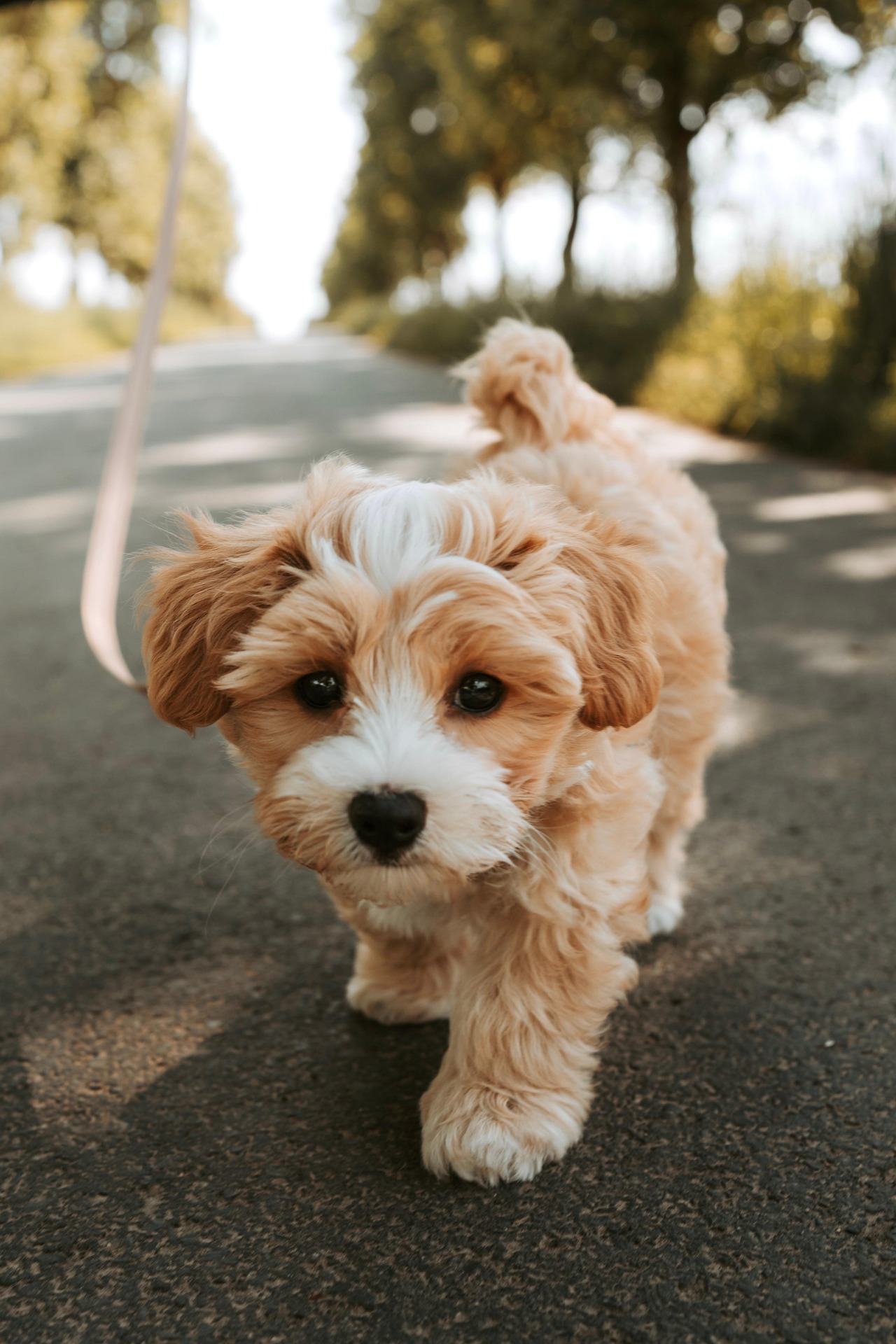
Training a dog isn't something for specialists. Any owner can teach basic commands at home, with patience and consistency. You don't need expensive equipment or special talent. You need treats, time and a reasonable amount of stubbornness on your part.
The commands I'll teach here are the fundamentals: sit, down, stay, come. With these four, you solve 90% of daily situations. The rest is refinement.
Before starting: basic principles
Modern training uses positive reinforcement. The idea is simple: behavior that generates good results repeats. You want the dog to sit? Make sitting generate something it wants. Treat, praise, play.
That's why many people use a clicker, that little "click" sound. The click marks the exact moment of success, and the dog learns that click = treat coming. Works well, but it's not mandatory. A word like "yes!" or "good!" said always the same way does the same job.
Short sessions work better than long ones. Five minutes of focused training several times a day beats one hour of tiring training once a week. Dogs have limited concentration capacity, especially puppies.
Always end on a success. If it's making many mistakes, go back to something easier it knows how to do, praise, and end. Ending frustrating discourages both of you.
Command: Sit
The most basic and usually the easiest to teach. Useful in countless situations: before crossing the street, before putting food, when visitors arrive.
- Hold a treat in front of the dog's snout, very close.
- Take the treat slowly up and back, passing over its head. The natural movement to follow with the eyes makes the rear end go down.
- The instant the rear touches the ground, say "yes!" (or click) and give the treat.
- Repeat several times until it offers the sit easily.
- When it's fluid, start saying "sit" one second before making the gesture. Gradually it associates the word with the behavior.
- Gradually, reduce the gesture until you can do it with just the word.
If it backs away instead of sitting, train near a wall so there's nowhere to go. If it jumps at the treat, you're holding it too high.
Command: Down
A bit more difficult because it requires the dog to put itself in a more vulnerable position. Some dogs resist at first.
- Start with the dog sitting.
- Hold a treat in front of the snout and take it slowly toward the ground, between the front paws.
- When the treat reaches the ground, pull it a bit forward. The dog tends to stretch its paws and lie down to reach it.
- The moment elbows and chest touch the ground, mark ("yes!") and reward.
- If it lifts its rear instead of lying down, don't give the treat. Start over from sit.
- When it's fluid, add the word "down" before the gesture.
Some dogs learn easier if you're sitting on the ground with them. Makes the situation less "top-down".
Command: Stay
This one is more challenging because it goes against the dog's instinct to follow you. It's also one of the most useful: you can ask it to stay while you open the door, while you prepare food, while you walk away.
- Put the dog in "sit" or "down".
- With open palm facing it (like a "stop" sign), say "stay".
- Wait literally one second. If it didn't move, mark and reward.
- Gradually increase time: two seconds, three, five...
- When it holds a few seconds with you standing still, start taking one step back. Return and reward if it stayed.
- Increase distance very gradually. If it breaks the stay, you advanced too fast. Go back to the previous level.
Introduce a release word like "ok" or "free" so it knows when it can leave the position. This is important because otherwise it doesn't know if it can or cannot move.
Command: Come (Recall)
The most important for safety. A dog that comes when called, even with distractions, is a dog you can have more freedom to let off-leash in safe places. And it can save its life in an emergency situation.
For that very reason, it's the hardest to really train. Easy at home without distraction. Difficult at the park with other dogs.
- Start in environment without distraction, with the dog close to you.
- Say its name followed by "come!" in an animated, cheerful tone.
- When it comes (even if just a few steps), make a celebration. Treat, exaggerated praise, affection. Coming to you needs to be the best thing in the world.
- Increase distance gradually, always in controlled environment.
- Introduce light distractions: another person in the room, a toy on the floor.
- Only go to external environments when recall is very solid at home.
Another tip: don't repeat the command. If you say "come, come, COME, COME!" it learns that it doesn't need to obey the first times. Say it once. If it doesn't come, go to it, put on the leash, and try again later in an easier situation.
What doesn't work
Physical punishment doesn't train, it only scares. The dog may even stop doing something in front of you, but out of fear, not understanding. And fear ruins the relationship and can create worse behavior problems.
Yelling also doesn't work. Dogs don't understand Portuguese, they understand tone and pattern. Yelling "SIT!!" isn't clearer than saying "sit" calmly. It's just more stressful for everyone.
Physically forcing (pushing the rear down to sit, for example) may even work short-term, but doesn't teach the dog to do it on its own. And with large dogs, it's not even viable.
When to seek professional help
Most owners can teach basic commands on their own. But some situations call for help from a trainer or behaviorist:
Aggressiveness, whether with people or other animals. Don't try to solve it alone, it can worsen and it's dangerous.
Extreme fear or anxiety that interferes with the dog's life. Noise phobia, severe separation anxiety, panic about leaving home.
Problems you tried to solve and couldn't after weeks of consistent attempts.
Or simply if you want to speed up the process and learn better techniques. A good trainer teaches you to teach the dog, doesn't do the work for you.
Consistency is the secret
The ingredient most lacking in training isn't technique, it's consistency. If "sit" sometimes means sit and sometimes doesn't, the dog gets confused. If sometimes you let it jump on people and sometimes scold, it doesn't know what's right.
The whole family needs to use the same commands, the same rules. It's no use you training if another person lets the dog do everything you prohibited.
Training isn't a project that ends. It's continuous maintenance. Even trained dogs need reinforcement from time to time. Use commands in daily life: ask for sit before giving food, before throwing the ball, before putting on the leash. This way training becomes incorporated into routine and the dog keeps commands sharp.
Good luck. It will work out.