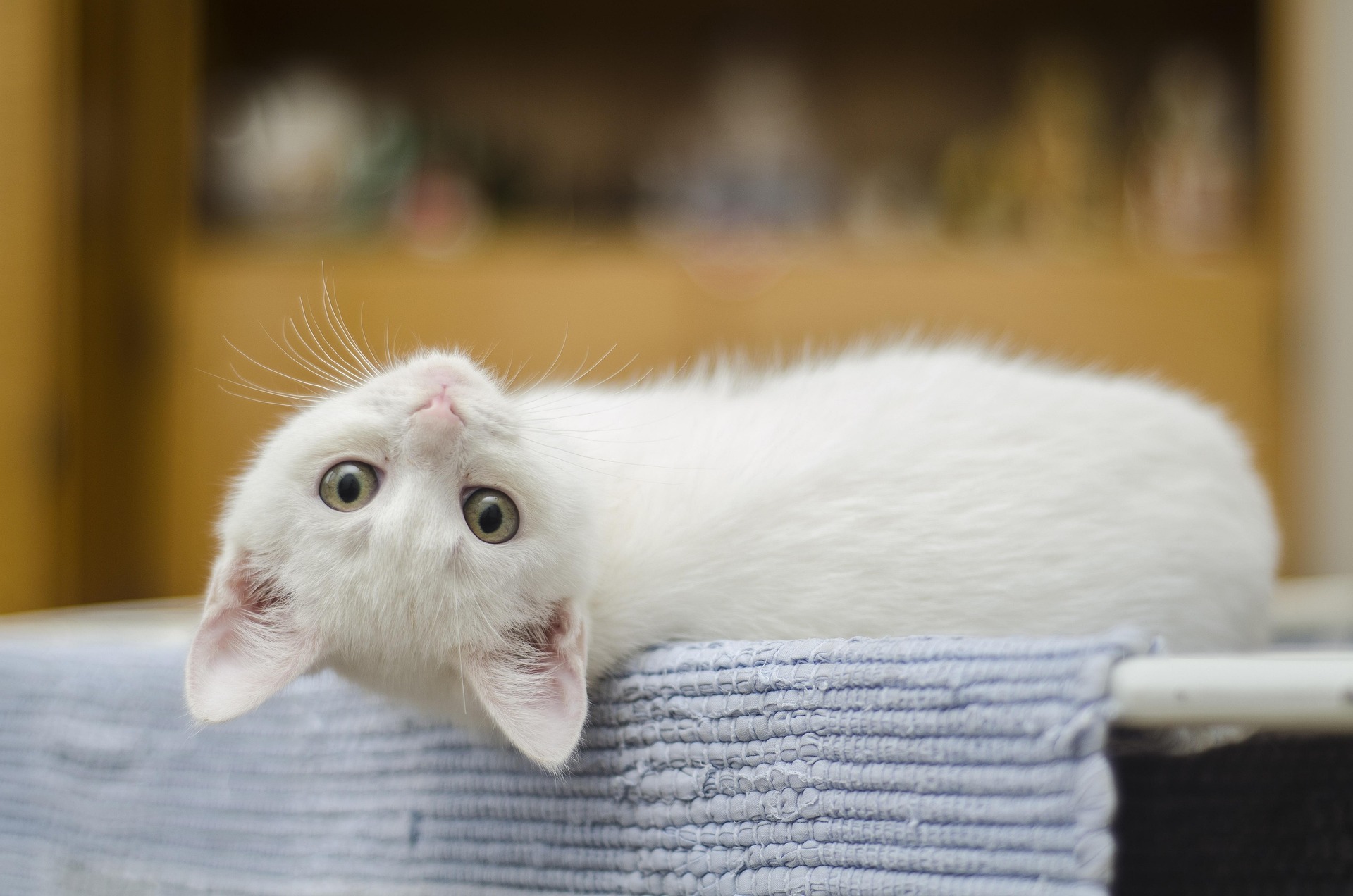
Cats are often described as mysterious, unpredictable, impossible to understand. The truth is they communicate all the time, just in a different way than dogs and humans. When you learn the "language", you realize they're not so enigmatic.
This article will help you decode what your cat is expressing and why it does some things that seem senseless.
Body language
Unlike dogs, which are more expressive with the whole body, cats communicate a lot through subtle details. Pay attention to:
The slow blink
When a cat looks at you and blinks slowly, it's a declaration of love in the feline world. Means trust, affection. You can do it back, cats understand and often respond.
On the other hand, staring fixedly without blinking is a threat. If you meet a strange cat or a fearful cat, avoid prolonged direct eye contact.
Vocalizations
Adult cats don't meow much to each other. Meowing is a vocalization developed mainly to communicate with humans. They learn that meowing generates response.
Types of meows
Short meow: Greeting, "hi".
Prolonged meow: Request for something, usually food or attention.
Repetitive and insistent meow: "I want this NOW", sometimes also indicates discomfort.
Deep, guttural meow: Warning, irritation, or preparation for fight.
Very loud and constant meow (female): Heat.
Purring: Usually means contentment, but cats also purr when they're sick, scared or dying. May be self-comfort mechanism. Context matters.
Hissing: Fear or aggression warning. "Stay away from me".
Trilling (little "brrrup" sound): Friendly greeting, especially from mother to kittens. If your cat does this to you, it's affection.
Chattering (that "klak klak" sound looking out the window): Predatory frustration. It's seeing a bird it can't catch.
Common behaviors and what they mean
Kneading
That rhythmic paw movement. Comes from infancy, when they massaged mother's teats to stimulate milk. Means the cat is extremely comfortable and happy. Some drool while doing this. It's regression to a state of total well-being.
Rubbing against you
Cats have scent glands on cheek, chin, base of ear and base of tail. When they rub against you, they're marking you with their scent. It's property claim, but also affection. "You are mine".
Bringing "gifts" (dead or dying animals)
Hunting behavior. Theories vary: it may think you're an incompetent hunter and need help. May be teaching instinct (mothers teach kittens to hunt this way). Or may simply be sharing prey with group members. Either way, don't scold. Thank and dispose discreetly.
Sleeping on top of you or close
Trust and affection. Cats are vulnerable when sleeping. Choosing to sleep near you means they trust you to protect them. Besides, you're warm.
Showing belly
The belly is the most vulnerable part. Showing means trust. BUT: unlike dogs, exposing belly isn't necessarily an invitation to pet there. Many cats show belly and bite if you touch. May be a trap. Know your cat.
Knocking things off table
Part curiosity (see what happens), part because their hunting instincts are activated by movement. May also be attention seeking, when it realizes this generates your reaction.
Nighttime running (3 AM craziness)
Cats are crepuscular, more active at dawn and dusk. That energy needs to go somewhere. Active play sessions before you sleep can help tire it. It's not abnormal behavior, it's feline nature.
Sitting on things you're using
The laptop keyboard, the book, the newspaper. Why? You're paying attention to that, not to it. It wants to redirect your attention. Also: things you use get your scent, and cats like familiar scents.
My cat has a radar to detect when I open the laptop. Can be sleeping on the other side of the house, in seconds it's on the keyboard.
Scratching furniture
It's not malice or bad manners. Scratching is physical and behavioral need: sharpens claws, removes old layers, marks territory (has glands on paws), and allows muscle stretching.
The solution isn't to punish, it's to redirect. Offer attractive scratchers (position, material and location your cat prefers) and make furniture less attractive (double-sided tape, aluminum foil temporarily). Catnip on scratcher helps.
Behaviors that indicate problems
- Sociable cat that suddenly hides
- Calm cat that becomes aggressive
- Drastic increase or decrease in appetite
- Stopping use of litter box
- Excessive vocalization, especially in senior cats
- Excessive licking that creates bald spots
These may be signs of pain, disease or severe stress. Veterinarian is the first stop.
Why do cats hide when they're not well?
Survival instinct. In nature, sick animal is easy target. Hiding protects from predators. That's why it's so hard to notice when cat is sick: they actively try to disguise it.
If your normally sociable cat starts hiding and staying in isolated places, take it seriously. May be a sign that something is wrong.
Understanding needs
Much "bad behavior" in cats is, actually, unmet need:
Scratching furniture: Needs adequate scratcher.
Urinating outside box: Dirty box, poorly located, disease, or stress.
Attacking ankles: Unsatisfied hunting instinct. Needs interactive play.
Meowing too much: Hunger, boredom, loneliness, pain, or learned that meowing works.
Waking you in the middle of the night: Cats are more active at night. Play before sleep and late night feeding can help.
Building bond
Cats are different from dogs. They won't obey you by hierarchy. The relationship is more of partnership. Forcing interaction usually pushes away, respecting space attracts.
Let the cat come to you. Blink slowly. Offer your hand for it to smell before petting. Learn where it likes to be touched (usually head and chin) and where it doesn't (usually belly and base of tail, though it varies).
Daily interactive play strengthens bond. Wand with feather, laser (always end with something physical it can "catch"), rolling balls.
And patience. Feline trust is earned, not given. When you finally gain it, it's one of the most rewarding things there is.