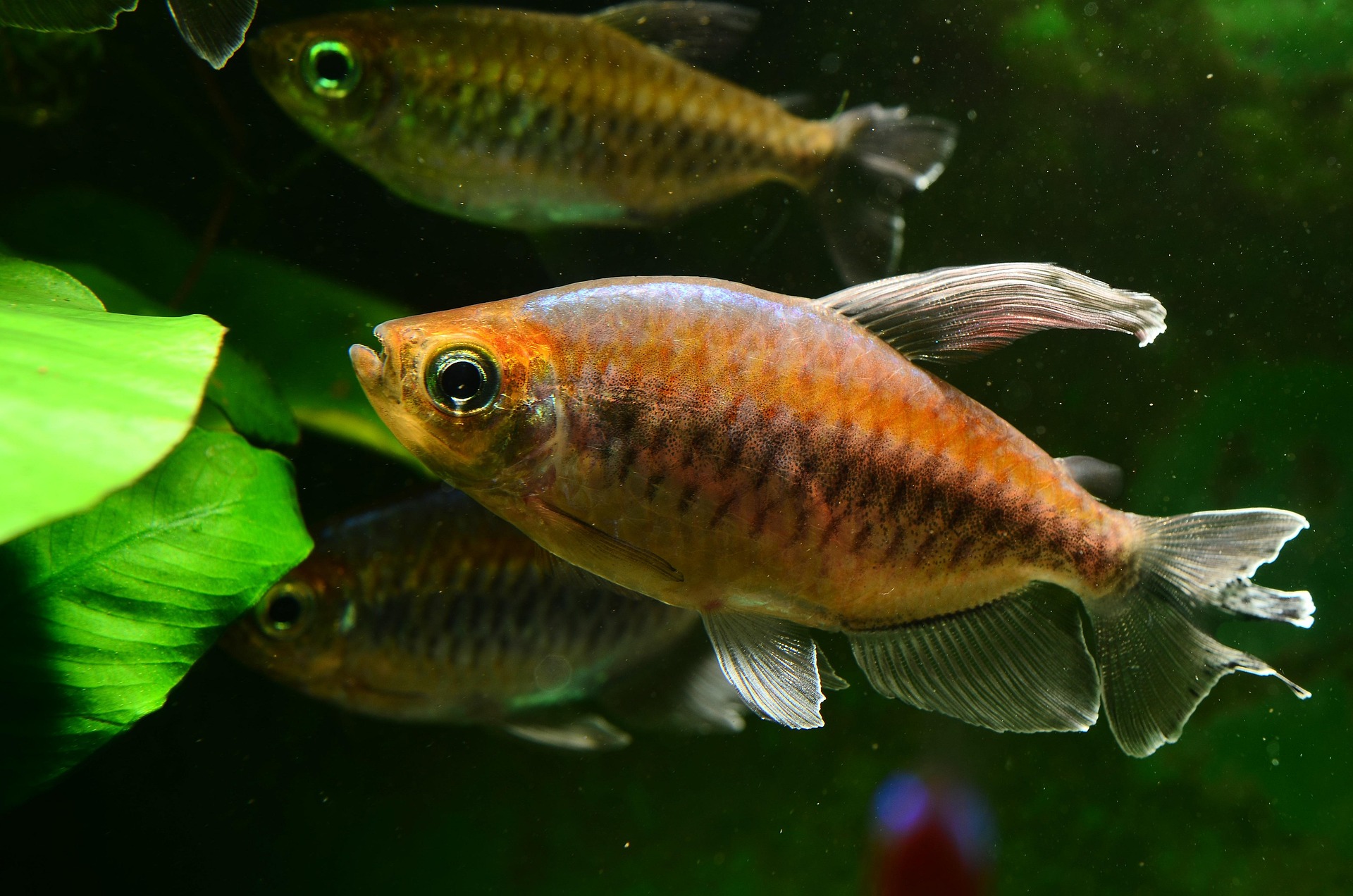
A beautiful and harmonious community aquarium is the dream of many aquarists. Several colorful species living peacefully together. But not every fish can live with any other. Choosing wrong means fights, stress, injured or dead fish.
Understanding compatibility is essential before setting up your fish selection.
Compatibility factors
Temperament
Some fish are peaceful, others territorial, others predators. Mixing an aggressive fish with timid fish is a recipe for disaster.
Size
General rule: fish eat what fits in their mouth. A fish too large will eat smaller ones. Even "peaceful" fish are opportunistic.
Water parameters
Fish have preferences for temperature, pH and hardness. Mixing fish that need soft acidic water with fish that need hard alkaline water means someone will suffer.
Swimming level
Fish occupy different levels: surface, middle, bottom. A good community uses all levels. Too many fish at the same level causes competition.
Speed and behavior
Very active fish can stress calm fish. Very slow fish can be bullied by fast fish that nip fins (fin nippers).
Combinations that work
Classic tropical water community
Tetras (neon, cardinal, ember) + Rasboras + Corydoras + a pair of Dwarf Gourami. All peaceful, similar parameters, occupy different levels. It's a classic because it works.
Livebearer aquarium
Guppies + Platies + Mollies + Swordtails. All tolerant, resistant, similar parameters. But attention: all reproduce a lot, can fill up quickly.
Active bottom aquarium
Corydoras (in group of 6+) + Kuhli loaches + surface fish like Hatchets. Bottom occupied but harmonious, surface and middle free for other peaceful fish.
Problematic combinations
Betta with almost anything
Male bettas are territorial and aggressive with other males. May attack colorful fish or long-finned fish (confuse with another betta). If you want company for betta, research a lot first.
African cichlids with community fish
Malawi and Tanganyika cichlids are generally aggressive and need high pH. Don't combine with tetras, guppies, etc. Better kept with other African cichlids in specific aquarium.
Large predators with small fish
Oscars, Arowanas, Knife fish will eat neons and guppies. They are predators. Seems obvious, but many people don't research adult size before buying.
Tiger barbs with long-finned fish
Tiger barbs are famous fin nippers. Will destroy fins of guppies, angelfish, bettas. If you want barbs, keep in large group (reduces aggression) and avoid easy targets.
"It depends" cases
Angelfish
Seem peaceful, but are cichlids. May eat small fish when adults (neons become snacks). May be territorial, especially when breeding. Work with larger and calm fish.
Gouramis
Males may be territorial with each other. Some species are more aggressive than others. Dwarf gourami is usually calm, Giant gourami is another story.
Plecos
Most are peaceful, but some get huge (Common pleco passes 40cm). Some develop territoriality when adults. Research the specific species.
Practical rules
Research BEFORE buying. Every fish. Always. Adult size, temperament, water needs, social behavior.
Schools are schools. Schooling fish (tetras, corydoras, rasboras) need groups. A neon alone is a stressed neon. Minimum 6, more is better.
Male and female ratio. In species where males are territorial or harass females (many livebearers), have more females than males (2:1 or 3:1).
Hiding places. The more hiding places (plants, decoration), the less conflict. Fish that can flee or hide suffer less aggression.
Introduce fish gradually. Don't put all at once. Add the most timid first, the most territorial last. Gives time for each to establish its space.
Setting up your community
An approach that works:
- Define aquarium size and water parameters you want to maintain
- Choose one or two "main" species you really want
- Research what's compatible with them
- Think about occupying different levels (bottom, middle, surface)
- Calculate aquarium capacity (don't overstock)
- Make a list and verify compatibility of each pair
Compatibility websites and apps can help as starting point, but don't replace your own research. Each fish has individual personality.
When it goes wrong
If you already have a compatibility problem:
Short term: Separate those involved. Use a breeding box or hospital aquarium temporarily.
Long term: Find new home for the problematic fish (or for the victim, if you prefer to keep the aggressor). Stores sometimes take back, aquarium groups can help relocate.
There's no shame in admitting a compatibility mistake. It's better to relocate a fish than to live with an aquarium stressful for everyone.